Medications play an important role in preventing, treating, and managing many health conditions. However, medicines only work effectively when they are used correctly. Unfortunately, medication mistakes are more common than many people realize and can lead to treatment failure, unwanted side effects, or even serious health complications.
The good news is that most medication errors are preventable. By understanding the common mistakes people make and learning how to avoid them, you can protect your health and get the best results from your treatment.
Why Proper Medication Use Matters
Every medication is prescribed for a specific reason, dosage, and duration. Following these instructions carefully helps ensure the medicine works as intended while reducing the risk of complications.
Using medications correctly can:
- Improve treatment effectiveness
- Reduce the risk of side effects
- Prevent complications
- Support faster recovery
- Improve your overall quality of life
Common Medication Mistakes
1. Skipping Doses
Many people forget to take their medications or intentionally skip doses because they feel better.
Skipping doses can reduce the effectiveness of treatment and may allow illnesses to worsen.
How to Avoid It
- Set reminders on your phone.
- Use a pill organizer.
- Take your medication at the same time every day.
2. Stopping Medication Too Early
One of the most common mistakes is discontinuing medication once symptoms improve.
This is especially dangerous when taking antibiotics, as stopping treatment early may allow bacteria to survive and become resistant.
How to Avoid It
Always complete the full course of medication unless your doctor or pharmacist advises otherwise.
3. Taking the Wrong Dosage
Taking more medication than prescribed does not speed up recovery, and taking less may prevent the medicine from working properly.
Both situations can be harmful.
How to Avoid It
- Read the label carefully.
- Use the measuring device provided for liquid medications.
- Never adjust your dosage without professional advice.
4. Mixing Medications Without Advice
Some medicines interact with other prescription drugs, herbal remedies, vitamins, or supplements.
These interactions can reduce effectiveness or cause harmful side effects.
How to Avoid It
Inform your pharmacist about every medication and supplement you are taking before starting a new one.
5. Sharing Prescription Medications
A medication that works for one person may not be safe or effective for someone else.
Different people require different dosages and treatments based on their health conditions.
How to Avoid It
Never share prescription medicines with family or friends.
6. Ignoring Food Instructions
Some medications should be taken with food, while others must be taken on an empty stomach.
Ignoring these instructions can affect how well the medicine works or increase side effects.
How to Avoid It
Always follow the instructions provided by your pharmacist or on the medication label.
7. Using Expired Medicines
Expired medications may lose their effectiveness and, in some cases, become unsafe to use.
How to Avoid It
Regularly check your medicine cabinet and safely dispose of expired medications according to local guidelines.
8. Poor Medication Storage
Heat, moisture, and direct sunlight can reduce the effectiveness of many medicines.
Bathrooms and kitchens are often unsuitable storage locations because of temperature and humidity changes.
How to Avoid It
Store medications in a cool, dry place and keep them out of the reach of children.
Tips for Safe Medication Use
To get the best results from your medications:
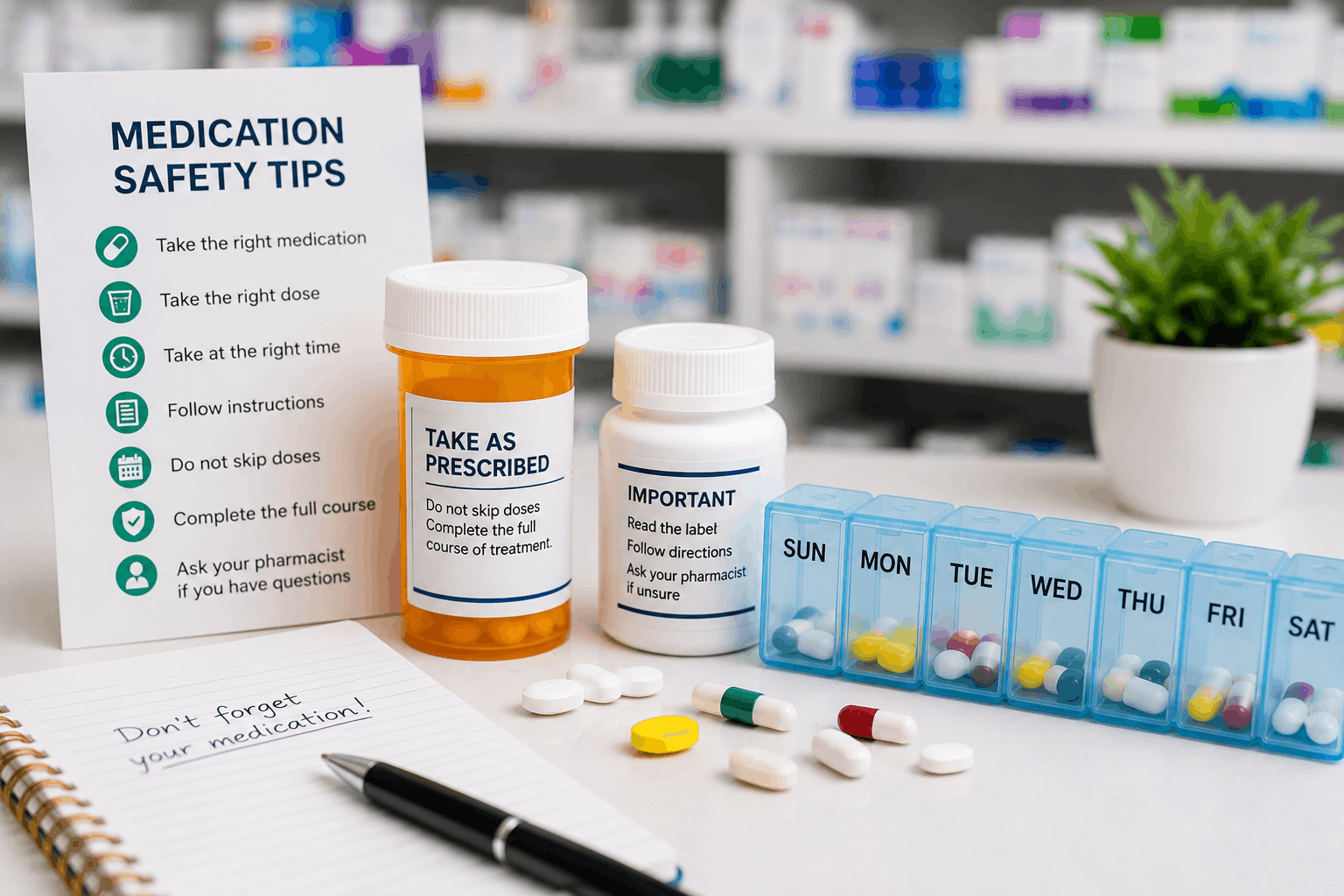
- Follow your prescription exactly as instructed.
- Read medication labels before use.
- Never skip doses.
- Complete the prescribed treatment.
- Ask questions if instructions are unclear.
- Keep an up-to-date list of all medications you take.
- Attend follow-up appointments when recommended.
The Importance of Talking to Your Pharmacist
Your pharmacist is an accessible healthcare professional who can help you use medications safely and effectively.
A pharmacist can:
- Explain how your medication works.
- Discuss possible side effects.
- Identify drug interactions.
- Recommend the best time to take your medicine.
- Answer questions about missed doses.
- Provide guidance on proper storage.
Never hesitate to seek professional advice if you are unsure about any aspect of your medication.
When to Seek Immediate Medical Attention
Contact your healthcare provider immediately if you experience:
- Difficulty breathing
- Severe allergic reactions
- Swelling of the face, lips, or throat
- Persistent vomiting
- Severe dizziness
- Chest pain
- Unusual bleeding
- Serious side effects after taking medication
Prompt medical attention can prevent complications and ensure your safety.
Conclusion
Most medication mistakes can be prevented with the right knowledge and professional guidance. Taking your medicines exactly as prescribed, following storage instructions, and consulting your pharmacist whenever you have questions will help you achieve better treatment outcomes and protect your health.
At TOCIOUS PHARMACY LTD, we are committed to helping you use your medications safely and confidently. Our experienced pharmacy team is always available to provide medication counseling, answer your questions, and support your journey toward better health.
Need Expert Medication Advice?
Whether you have questions about your prescriptions, possible drug interactions, or how to take your medications correctly, TOCIOUS PHARMACY LTD is here to help. Visit our pharmacy or contact our team for trusted pharmaceutical care and professional guidance tailored to your healthcare needs.